Let’s be honest for a moment. Life is hard. You wake up some mornings, and the weight of everything just presses down on your chest. Maybe it’s financial stress that won’t go away. Maybe it’s a health issue that scares you. Maybe it’s that person who keeps hurting you, and you’re tired of forgiving. Maybe it’s your own nafs that keeps pulling you toward sins you swore you’d leave.
And you wonder: How much longer? How much more can I take?
I’ve been there. We’ve all been there.
But here’s something beautiful I want you to understand today. The very fact that you’re struggling and still holding on? That’s not a weakness. That’s sabr. And in Islam, sabr is not just “waiting.” It’s not just “being patient.” It’s a superpower that Allah gives to those He loves.
Read this article till the end. It won’t take much of your time, but these authentic Ahadith about patience might just change the way you see every difficulty in your life, Insha’Allah.
If you want a detailed explanation of a powerful Quranic verse on sabr, including its word-by-word meaning and benefits, read our full guide on Innallaha Ma Sabireen meaning in English.
Authentic Ahadith About Patience (Sabr)
Hadith 1: Patience is the Best Gift
Abu Sa’id Al-Khudri (radiAllahu anhu) reported that the Prophet (ﷺ) said:
And whoever remains patient, Allah will make him patient. Nobody can be given a blessing better and greater than patience.”
Source: Sahih Bukhari 1469, Sahih Muslim 1053
Think about this. The Prophet (ﷺ) could have said patience is one of the best gifts. But he said there is no gift better than patience. SubhanAllah. This means if you have sabr, you have something more valuable than wealth, more valuable than health, more valuable than everything this dunya can offer.
Hadith 2: The Reward is Proportionate to the Trial
Anas ibn Malik (radiAllahu anhu) reported that the Prophet (ﷺ) said:
Indeed greater reward comes with greater trial. And indeed, when Allah loves a people He subjects them to trials, so whoever is content, then for him is pleasure, and whoever is discontent, then for him is wrath.
Source: Jami at-Tirmidhi 2396 (Hasan Sahih)
Read that again. Slowly.
“When Allah loves a people, He tests them.”
This means your trial is not a sign of Allah being angry with you. It’s actually the opposite. It’s a sign that Allah has chosen you for something special. He wants to raise your rank. He wants to wipe away your sins. He wants to hear you call out to Him in the darkness of the night.
Hadith 3: The Believer’s Entire Life is Good
Suhaib reported that Allah’s Messenger (ﷺ) said:
Strange are the ways of a believer for there is good in every affair of his and this is not the case with anyone else except in the case of a believer for if he has an occasion to feel delight, he thanks (God), thus there is a good for him in it, and if he gets into trouble and shows resignation (and endures it patiently), there is a good for him in it.
Source: Sahih Muslim 2999
This hadith changes everything.
Look at how the world works. When something bad happens to a non-believer, it’s just bad. They break down. They despair. They curse their luck.
But when something bad happens to you? If you have sabr, that “bad” thing becomes good. It becomes a source of reward. It becomes a reason Allah raises your rank. It becomes an expiation for your sins.
So the believer wins either way. In comfort, we win through gratitude. In hardship, we win through patience. How beautiful is our Deen?
Hadith 4: True Patience is at the First Strike
Anas ibn Malik (radiAllahu anhu) narrated a beautiful story:
The Prophet (ﷺ) passed by a woman who was weeping beside a grave. He told her to fear Allah and be patient. She said to him, “Go away, for you have not been afflicted with a calamity like mine.” And she did not recognize him. Then she was informed that he was the Prophet (ﷺ) . so she went to the house of the Prophet (ﷺ) and there she did not find any guard. Then she said to him, “I did not recognize you.” He said, “Verily, the patience is at the first stroke of a calamity.”
Source: Sahih Bukhari 1283, Sahih Muslim 926
This is such an important lesson. Patience isn’t something you develop a week after the calamity. It’s what you show in that first moment of shock. In that moment when your heart is breaking, and your world is crumbling – can you still say Alhamdulillah? Can you still say Inna Lillahi wa Inna Ilayhi Raji’un?
That’s the patience that counts.
Hadith 5: The Dua That Brings Something Better
Umm Salama reported Allah’s Messenger (ﷺ) as saying:
If any Muslim who suffers some calamity says, what Allah has commanded him,” We belong to Allah and to Him shall we return; O Allah, reward me for my affliction and give me something better than it in exchange for it,” Allah will give him something better than it in exchange.
Source: Sahih Muslim 918
Umm Salamah (RA) herself practiced this. When her husband Abu Salamah (RA) passed away, she recited this dua. And Allah gave her something better – the Prophet (ﷺ) himself married her. SubhanAllah!
Inna Lillahi wa inna ilayhi raji’un. Allahumma Ajirni Fi Musibati Wakhluf Li Khairan Minha
Keep this dua memorized. You never know when you’ll need it. And when you say it with full yaqeen (certainty), Allah has promised to give you something better than what you lost.
Hadith 6: The Example of Prophet Yunus (AS)
Messenger of Allah (ﷺ) said:
“The supplication of Dhun-Nun (Prophet Yunus) when he supplicated, while in the belly of the whale was: ‘There is none worthy of worship except You, Glory to You, Indeed, I have been of the transgressors. (Lā ilāha illā anta subḥānaka innī kuntu minaẓ-ẓālimīn)’ So indeed, no Muslim man supplicates with it for anything, ever, except Allah responds to him.”
Source: Jami at-Tirmidhi 3505, Sahih
We talked about Ayat e Karima in a previous article. This is that dua. Prophet Yunus (AS) was in three layers of darkness – the darkness of the night, the darkness of the sea, the darkness of the whale’s belly. Yet he made sabr. He admitted his fault. He glorified Allah. And Allah saved him.
If Allah saved Yunus (AS) from that situation, He can save you from yours. Just have sabr and keep making dua.
Hadith 7: The One Who Controls His Anger
Narrated Abu Huraira:
Allah’s Messenger (ﷺ) said, “The strong is not the one who overcomes the people by his strength, but the strong is the one who controls himself while in anger.”
Source: Sahih Bukhari 6114, Sahih Muslim 2609
This is sabr in action. Controlling your anger doesn’t mean you never feel angry. It means when anger rises inside you, you hold it back for the sake of Allah. You don’t say things you’ll regret. You don’t break things. You don’t hurt people.
This kind of self-control is true strength. And it’s a form of sabr that Allah loves.
The Story of the Prophet (ﷺ) at the Grave of His Son
When the Prophet’s son Ibrahim died, the Prophet (ﷺ) held him, kissed him, and tears fell from his eyes.
`Abdur Rahman bin `Auf said, “O Allah’s Apostle, even you are weeping!”
The Prophet (ﷺ) replied: “O Ibn `Auf, this is mercy.” Then he wept more and said, “The eyes are shedding tears and the heart is grieved, and we will not say except what pleases our Lord, O Ibrahim! Indeed we are grieved by your separation.”
Source: Sahih al-Bukhari 1303
This is the perfect balance. The Prophet (ﷺ) didn’t suppress his emotions. He cried. He grieved. But he didn’t say anything that displeased Allah. He didn’t complain about Allah’s decree. He accepted it with patience while still feeling the natural human pain of loss.
This is our example. We feel pain. We cry. We hurt. But we don’t cross the line into complaining about Allah or rejecting His decree.
For a deeper understanding of why this quality is so highly regarded, you can read our guide on the importance of patience in Islam and how Sabr helps believers navigate life’s challenges.
Practical Tips to Develop Sabr
1. Make Dua Constantly
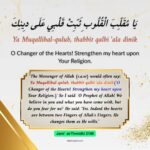
Ask Allah for sabr every single day. The Prophet (ﷺ) used to make this dua:
“Ya Muqallibal Qulub Thabbit Qalbi Ala Deenik” (O Turner of hearts, make my heart firm upon Your religion)
2. Connect with the Quran
Read the stories of the Prophets. See how much they endured. See how they remained patient. Their examples will give you strength.
3. Remember Jannah
Whatever you’re going through right now, it’s temporary. Jannah is forever. Every moment of patience in this dunya brings you closer to eternal peace in the next.
4. Give Sadaqah
The Prophet (ﷺ) said charity extinguishes sin. When you’re struggling, give something. Even a little. It softens the heart and brings relief.
5. Stay with Good Company
Surround yourself with people who remind you of Allah. When you’re weak, they’ll lift you. When you’re about to break, they’ll hold you together.
6. Say “Inna Lillahi wa Inna Ilayhi Raji’un” Often
Don’t wait for calamities. Make this phrase a regular part of your speech. It reminds you constantly that everything belongs to Allah and everything returns to Him.
7. Learn About the 99 Names of Allah
Knowing Al-Hakeem (The All-Wise), Al-Lateef (The Subtle), Al-Wadud (The Most Loving) helps you trust that whatever Allah does, He does with wisdom and love for you.
Conclusion: Your Patience is Not Wasted
Dear brother, dear sister.
I don’t know what you’re going through right now. Maybe you’re reading this with tears in your eyes. Maybe you’re at the edge of giving up. Maybe you’ve been praying for so long, and nothing has changed.
But please, don’t stop now.
- Every tear you shed while trusting Allah is recorded.
- Every night you stayed up making dua is witnessed.
- Every time you said Alhamdulillah, through the pain is preserved.
- Every moment you held your tongue from complaining is written.
And on the Day of Judgment, when you see the reward for your sabr, you will wish you had been tested even more. Because the reward is that beautiful.
“Only those who endure patiently will be given their reward without limit.” (Surah Az-Zumar, verse 10)
Sabr might be hard today, but Jannah is forever.
May Allah (SWT) grant us all the gift of sabr. May He make us among those who are patient in hardship, grateful in ease, and content with His decree. May He reunite us with the Prophets, the truthful, the martyrs, and the righteous in the highest gardens of Jannah. Aameen, Ya Rabbal Alameen.